"Gustav Mahler rises from the grave for one night — to dance."
A cinematic music video for "A Second Chance" from the album Synthesis, produced by BlueForest Studios.
"A Second Chance" opens as a woman (Briana) is drawn into a dark graveyard by mysterious music. Something draws her to a particular gravestone. She clears away the debris and begins reading the inscription aloud.
Mahler is magically awakened by the incantation and bursts open his grave — and immediately begins playing his trumpet, then singing and dancing.
Briana is too fascinated to flee, and Mahler quickly places her under his musical spell. Together they tear the night apart between two worlds — one a dark and textured graveyard, the other a dark studio lit with hyper-saturated lights and striking shafts of light that slash into the room through a large, dramatic row of windows. When the sun threatens the horizon the spell breaks, he drops back into the grave… opens one eye, winks, and is gone. Briana's spell is broken, and she stumbles out of the graveyard in a daze.
"Synths over strings — the chance I take tonight."
— the heart of the song
Every frame lives in one of two worlds — a dark, textured graveyard and a hyper-saturated, window-lit studio. We hold the contrast and let the cut between them carry the spell, right up to the wink that ends the night.
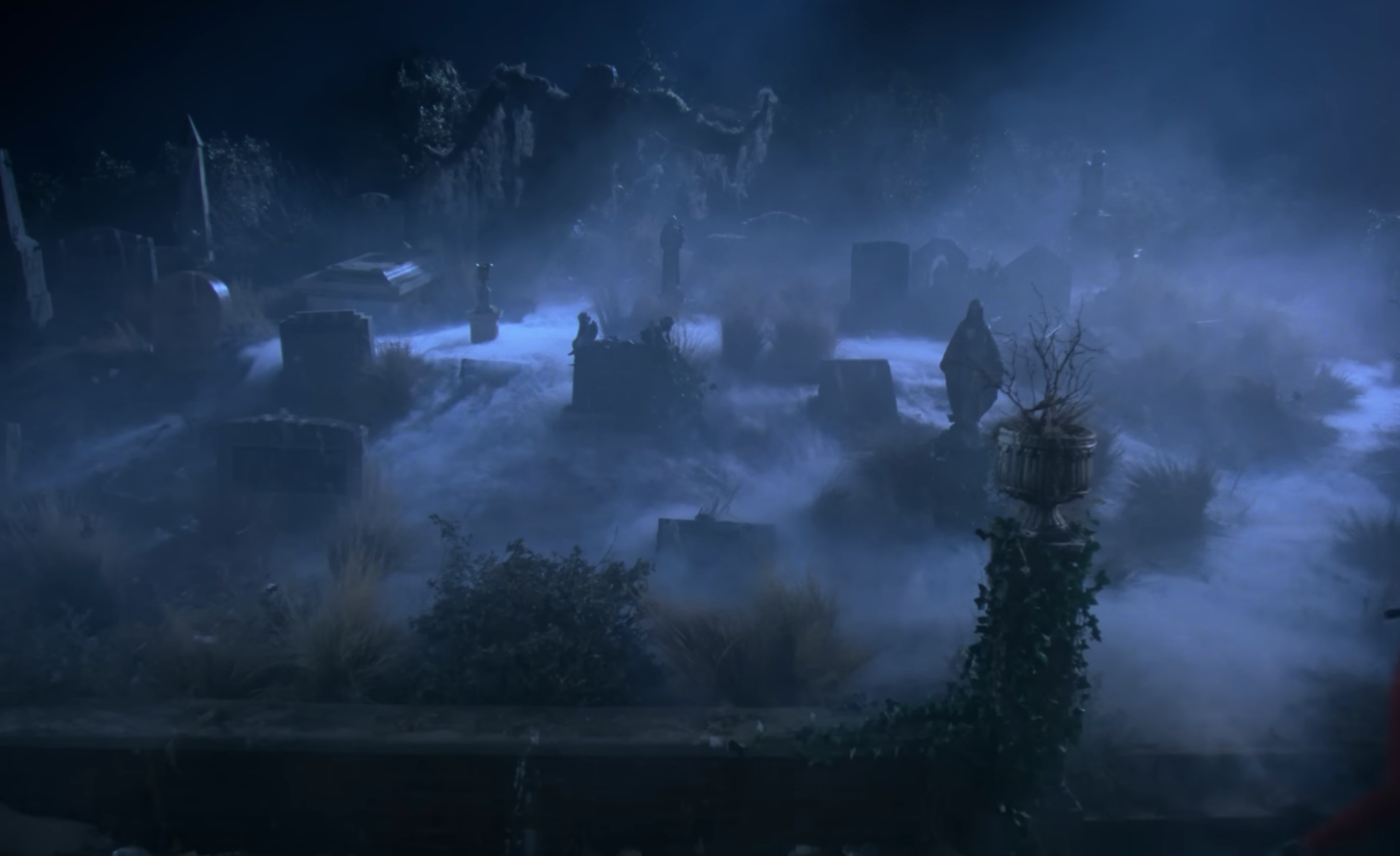
Briana follows mysterious music into a dark, fog-bound graveyard — pulled toward one particular gravestone.
She clears away the debris and begins reading the inscription aloud — an accidental incantation.
Mahler bursts from the grave at the surface — a Kill Bill breakout — and lifts his trumpet to the night.
He plays, sings and dances; too fascinated to flee, Briana falls under his musical spell.
The night splits in two — the textured graveyard and a hyper-saturated studio slashed by window light — as the choreography takes over.
The sun breaks the spell; he drops back into the grave, opens one eye, winks — and Briana stumbles out into the dawn, dazed.
Reference frames that lock our lighting logic before we ever roll.
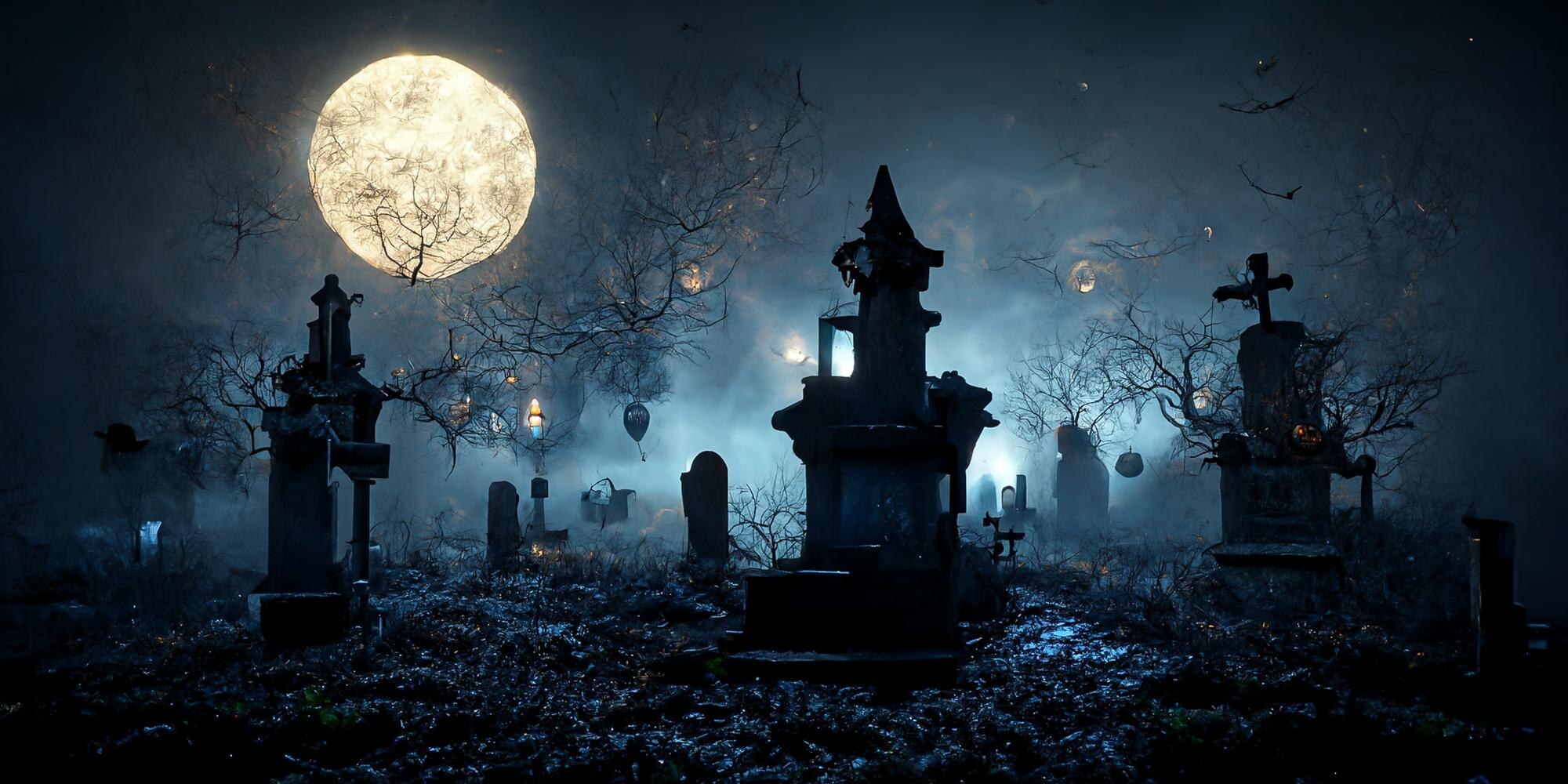
Heavy low fog with a hard blue uplight raking through it — a natural rim/backlight that carves our performers out of the dark — while the huge moon motivates a warm front key to actually light their faces. Cold rim + warm key is the whole palette in one frame.
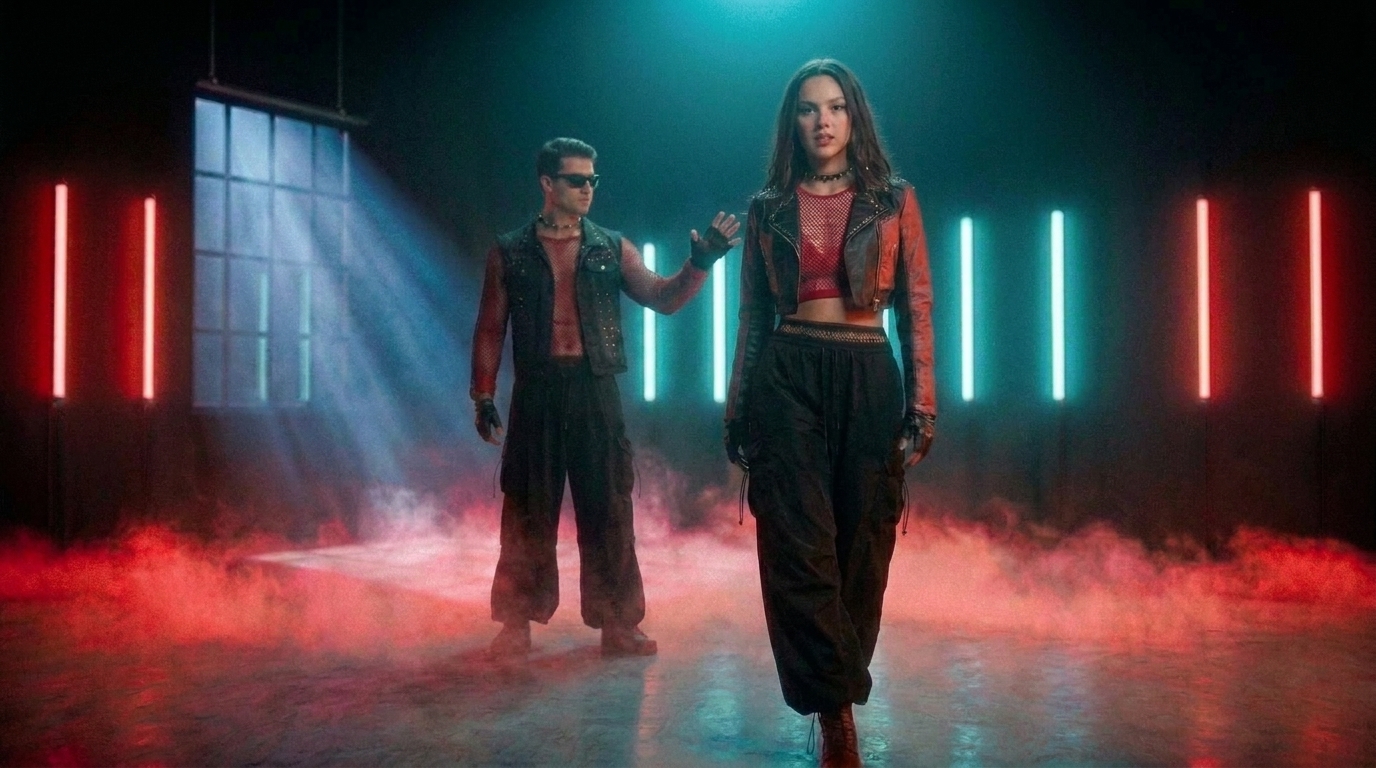
Straight from our storyboard: volumetric haze, tube-light columns and deep negative space — the moody, hyper-saturated world we'll build for the choreography, a slashing-light counterpart to the graveyard.
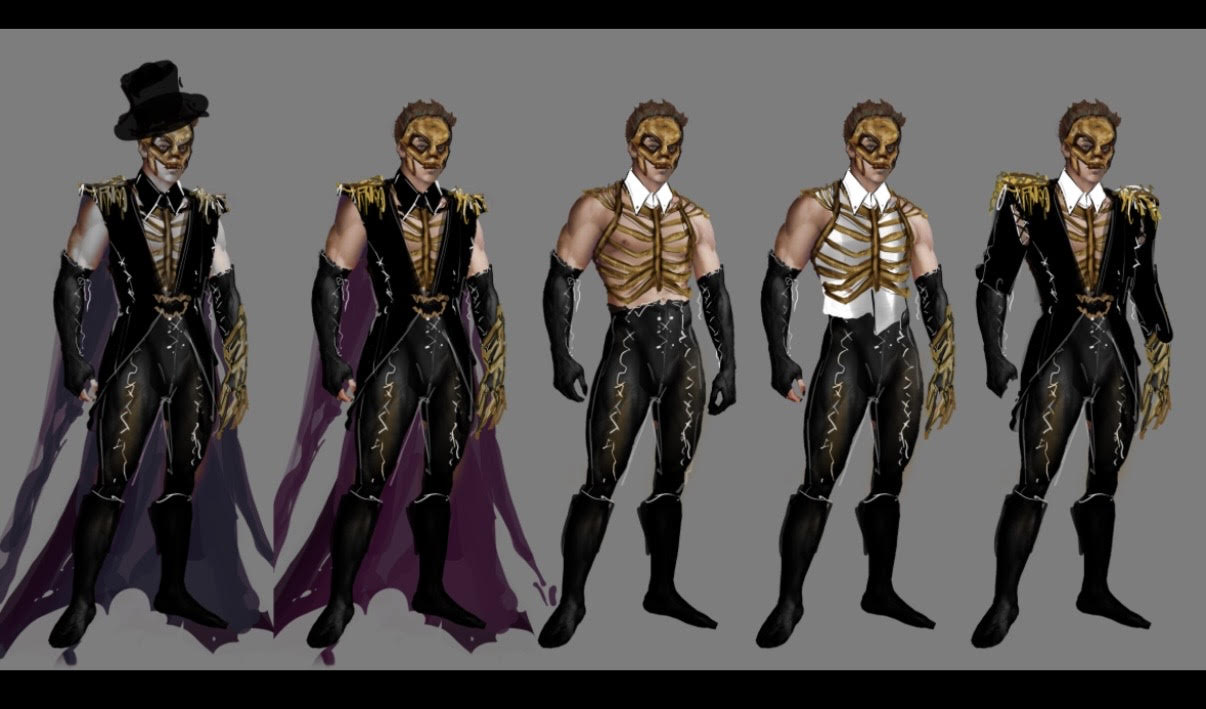
The opening: tattered shirt, exposed ribs and skin-wound SFX makeup — the body the world buried.
The hero look: gold ribcage and epaulettes, cape, gold skull face, baton in hand.
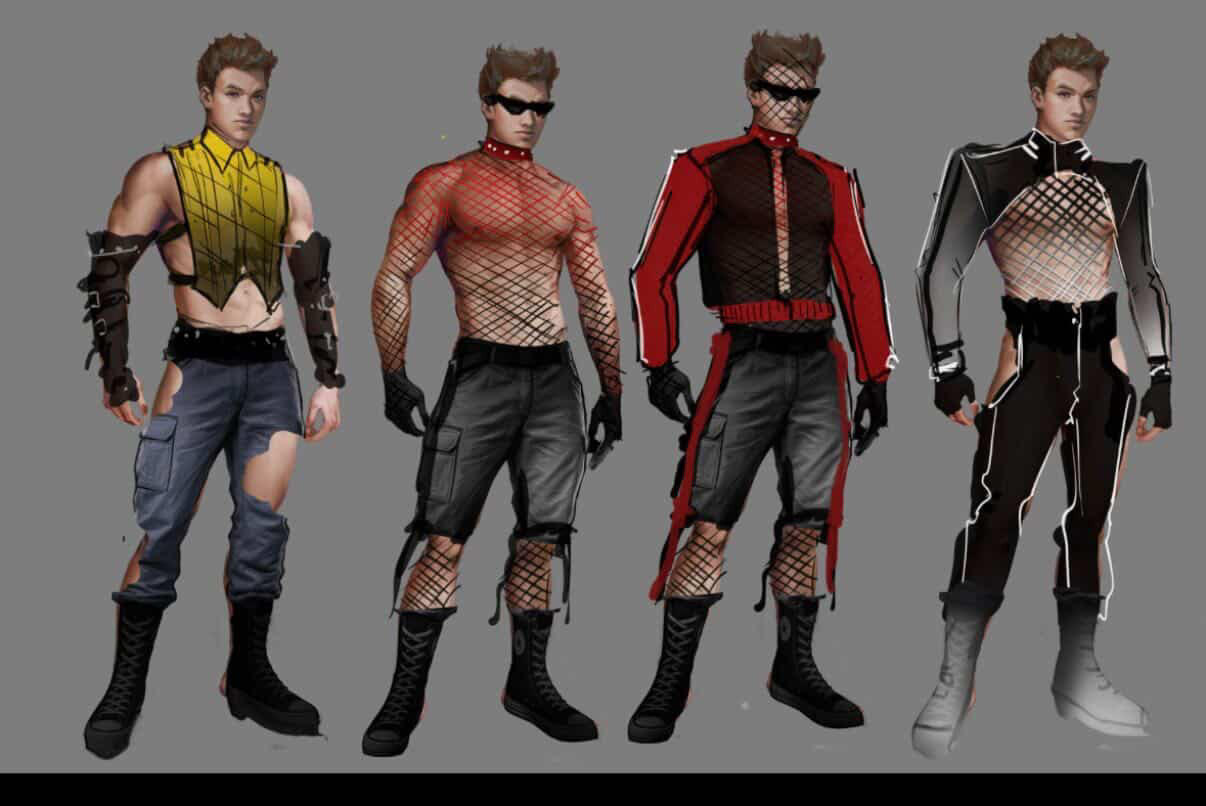
Edgier mesh and streetwear energy for the dance sequence — sourced and stylist-modified to the boards.
The graveyard world is built practically and shot in-camera — the Mahler monument, the grave and coffin, headstones, fog and moonlight, all physically on set. VFX stays a light finishing touch: sky replacement where the frame needs it, nothing more.
The full graveyard set: the carved Mahler gravestone with its glowing incantation, the rigged grave & coffin, surrounding headstones and dressing.
Real fog, a hard blue rim and a warm moon key on location at Panic Point — the atmosphere the camera sees is the atmosphere in the frame.
Edit, grade and finish in DaVinci Resolve in-house — with sky replacement applied only on the shots that need a bigger, stormier night.
The performance and everything the eye locks onto is physical, practical and in-camera.
The one place we reach for VFX — and only on the frames where the real sky can't deliver the drama.
What's on camera is real. Building the world practically means every take walks away with the shot already in it — no pipeline between the shoot and the film. Post effort goes where it shows: the cut, the grade, and a sky upgrade only where it earns its place.
We film the graveyard scene on an outdoor, nighttime field location and build a full graveyard set — real ground, real dark, real fog — then grow the world around it in post.
Day 1 graveyard + corpse SFX; Day 2 studio dance — tight, rehearsed, efficient.
The reverse-fall rise and fist-punch breakout — dramatic on camera, safe on set.
Real haze in-camera; sky, storm and lightning added in post where they're cheap and controllable.
Gustav and Brianna in the studio dance world: tube-light columns, low fog, and the hanging window rig — as we'll build it on Trailblazer's stage.
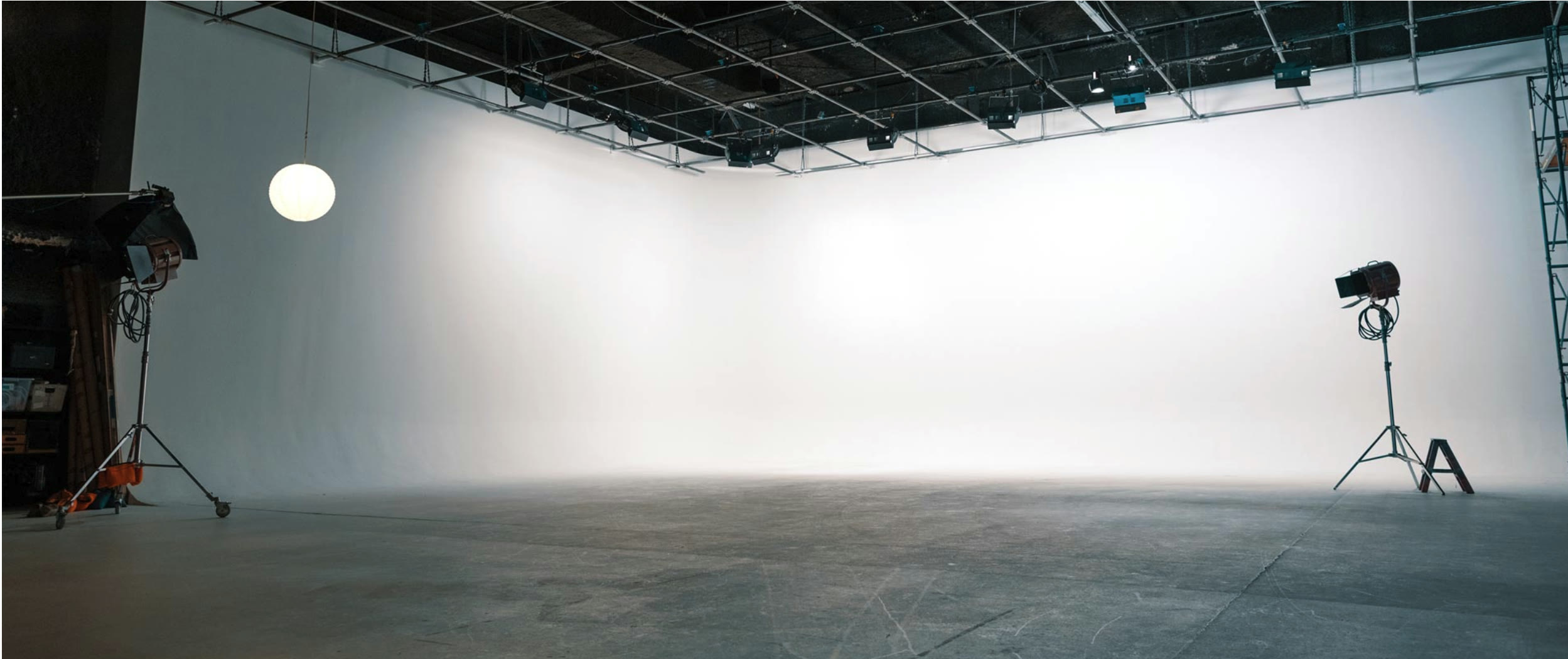
A full lighting grid, hard-corner cyc and a big clean floor — everything the dance world needs, ready to go dark and saturated.
Day 1 — Panic Point. The graveyard world, shot night-for-night on location: fog, moonlight, the grave and the rise.
Day 2 — Trailblazer Studios. The hyper-saturated dance world, built on Trailblazer's grid-and-cyc stage in Raleigh.
Trailblazer Studios
Directs, shoots and cuts the film end-to-end — your single creative throughline.

Scheduling, call sheets, crewing, locations and logistics — keeps both days on the rails.

Builds the coffin, grave and graveyard set, and styles the studio world.

Lead lighting craft — the moonlight, the underground glow and the lightning beats.

Rigging, camera support and on-set muscle across both build-heavy days.

Skull and ribcage makeup, skin wounds, and on-set SFX touch-ups.

Sources, modifies and fits the costume looks — the tattered corpse, the gold-skeleton hero, and the studio dance pieces.

Set support, resets and run-and-gun help throughout the shoot.
A kickoff-to-late-September arc, anchored by a Jul 10 test shoot and the Aug 20 Panic Point night shoot, with the Trailblazer studio day to follow. Exact dates are mapped out in the Project Schedule below.
Concept lock & storyboards · wardrobe sourcing and the graveyard set build · scheduling, casting confirm & call sheets.
Day 1 — the graveyard & the rise. Day 2 — the studio dance world.
Edit & assembly · sky replacement where needed · colour grade · sound sync to the master.
Review cut · up to two revision rounds · final 4K and web masters delivered.
One straightforward plan from kickoff to delivery, with two client review checkpoints built in.
Anchored by a Jul 10 test shoot, the Aug 20 Panic Point night shoot with the Trailblazer studio day to follow, and final delivery in late September.
Roles confirmed, quotes in and shoot dates reserved.
Full-team alignment: concept, references, look book and responsibilities.
Outdoor night-field graveyard location & permits secured; Creative Camp studio confirmed for the dance world.
Night-field graveyard plate — fog, moonlight & lighting test to lock the look and the VFX pipeline.
Full graveyard set build — monument, grave & coffin — plus wardrobe fittings and SFX-makeup tests.
Final storyboards, AI shot plan, schedule, call sheets, gear check & pre-light.
Night shoot at Panic Point, 3 PM – 1 AM, on the full built graveyard set — fog & moonlight.
Choreography, performance and the wink ending on Trailblazer Studios’ stage in Raleigh — date being finalized.
Footage backed up, organized and selects pulled.
Edit & assembly, with sky replacement composited only on the shots that need it.
First assembly cut to the master track.
Your notes on the rough cut — round 1.
Edit and VFX final and locked.
Final grade and sound design/mix to the master.
4K master plus web & social cuts delivered, after up to two revision rounds.
A complete production for one cinematic music video, grouped by what your investment buys — now including a second location, a prop builder, and expanded creative & VFX time.
Three simple steps and we're rolling toward your shoot.
We lock the final scope and budget — the look is proven and the number is set before you commit a dollar.
Give the green light and place the deposit to reserve your shoot dates on our calendar.
We sit down together to align the creative, lock looks and the shot list, and roll into pre-production.